
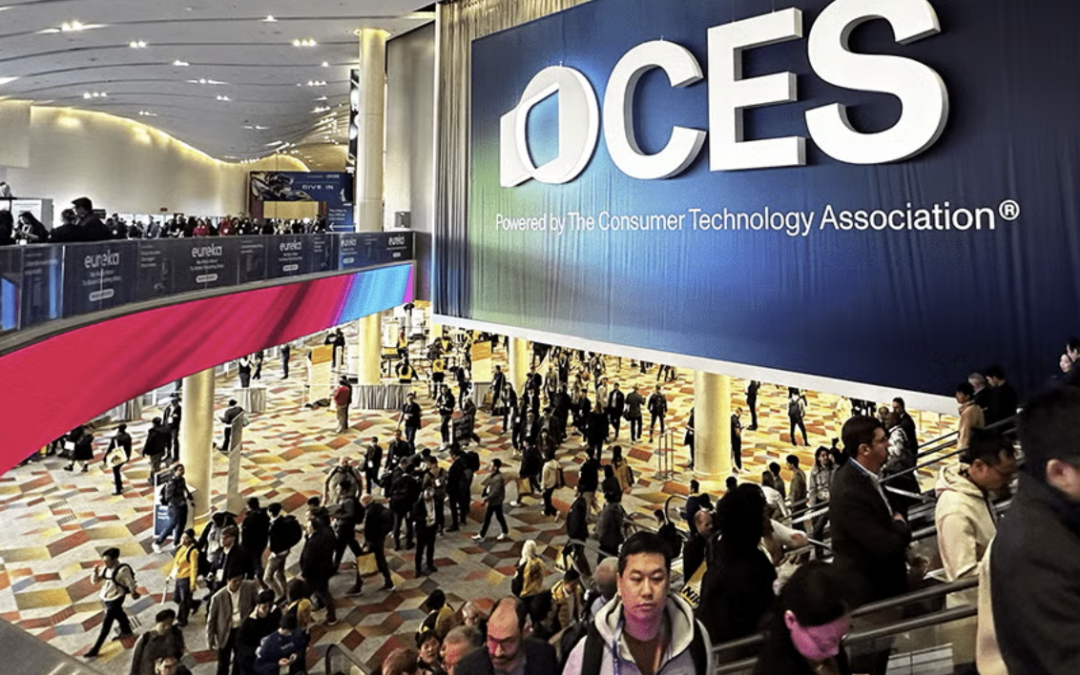
Welcome to 2026!
CES (Las Vegas, January 2026) is no longer just TVs and laptops. This year’s health-and-longevity wave is loud and clear: more home biomarkers, more “physiological age” scoring, more non-invasive sensing, and more subscription services layered on top of hardware. The upside is earlier signals and better coaching. The downside is noise, anxiety, and “confidence theater” if the measurements aren’t validated or interpreted correctly.
Below are the most longevity-relevant products and services unveiled or heavily featured around CES 2026—plus blunt reviews, what they’ll likely cost you, and what they mean for healthspan over the next few years.
1) The “Longevity Station” era: Withings Body Scan 2 (smart scale + biomarker platform)
What it is: Withings positioned the new Body Scan 2 as an at-home “longevity station”—a scale that goes beyond weight into multi-system screening (cardio + metabolic + vascular + more). It runs a roughly 90-second longevity assessment and groups 60+ biomarkers into big buckets like heart performance, hypertension risk, artery health, cellular/metabolic efficiency, and glycemic regulation. The Verge+1
Pricing / availability: Around $600 (The Verge reports $599.95; MacRumors reports $600) and targeted for Q2 2026 pending FDA clearance for some medical-adjacent features. The Verge+1
Why it matters for longevity:
If Withings executes, this is the start of a real shift: high-frequency cardiometabolic tracking at home (not once-a-year at your doctor) with trendlines you can actually act on. Even if individual readings aren’t diagnostic, patterns over time can push earlier lifestyle changes: blood pressure control, insulin sensitivity, stress load, and arterial stiffness are all longevity-critical levers.
My take:
- What’s impressive: It’s aiming at the right outcome—trajectory—not just a single number. Their “Health Trajectory score” framing is exactly how longevity should be managed. MacRumors+1
- What to watch: Any “non-invasive metabolic” claim needs careful skepticism. Use it as screening + trend awareness, not a medical verdict.
- Who should buy: People 50+ who will actually use it consistently (3–7x/week) and pair it with real habits (sleep, training, nutrition, BP management).
- Who should skip: Anyone prone to stress from metrics. Withings even built an “Eyes-Closed Mode” vibe for a reason. The Verge
2) The mirror that judges your biological age: NuraLogix Longevity Mirror
What it is: NuraLogix debuted an $899 “Longevity Mirror” that uses a 30-second selfie and “transdermal optical imaging” (camera-based analysis of subtle facial blood flow patterns) to estimate metrics like heart rate, blood pressure range, cardiovascular risk, metabolic health, stress, and a longevity score (1–100). The Verge+1
Pricing / subscriptions:
- $899 includes a year of service
- $99/year after that
- Optional concierge/coach layer mentioned at $399/year The Verge+1
Why it matters for longevity:
This is part of a bigger trend: contactless health screening in everyday objects. The long-term play is a world where your “health OS” is ambient—mirror, scale, wearable, and labs all feeding one personal model.
My take:
- What’s impressive: Zero fluids, zero wear time, low friction. That matters because compliance is everything.
- The problem: “Physiological age” scores can motivate… or mess with your head. The Verge coverage basically shows the emotional volatility this can cause. The Verge
- Who it’s for: Data-driven people who can treat it like a dashboard, not a diagnosis. Also households (it supports multiple profiles). Tom’s Guide
- Red flag: Blood pressure estimation is reportedly in the FDA clearance process—until that’s real, treat BP results as directional, not clinical. The Verge
3) At-home hormone testing goes mainstream: Eli Health + Mira
Hormones are finally showing up as consumer longevity tools—not just fertility tools. This matters because perimenopause/menopause and androgen shifts can hit sleep, mood, muscle retention, insulin sensitivity, and cardiovascular risk.
A) Eli Health “Hormometer” (saliva + smartphone camera)
What it is: A saliva-based cartridge you hold in your mouth, then analyze via your phone camera inside the app. At CES 2026, Eli Health announced expanded testing including testosterone and progesterone (alongside cortisol). The Verge
Pricing: Individual tests expected to start around $8.25 (per test). The Verge
My take:
- Big win: Cheap-ish, scalable hormone snapshots.
- Reality check: Great for trend awareness, not self-prescribing hormones. Use it to inform conversations with a clinician—not replace them.
B) Mira Ultra4 hormone monitor (urine “wands”)
What it is: A $249 egg-shaped analyzer plus disposable wands to test four hormones (FSH, LH, E3G, PdG), useful for fertility and perimenopause/menopause pattern tracking. The Verge
Pricing (as reported):
- Ultra4 monitor: $249
- Refill costs mentioned in reporting (wand refills and analyzer pricing vary); the article highlights refills as a cost factor. The Verge
My take:
- This category will grow fast because it hits a real pain point: women being told “it’s normal” without data.
- The longevity value comes from linking symptoms → sleep disruption → metabolic drift → intervention earlier.
4) Sleep becomes a medical-grade battleground: smart sensing + neurostimulation
Sleep is one of the highest ROI longevity levers. CES 2026 showcased two converging approaches: better measurement without wearables and active interventions (stimulation, coaching, environment control).
A) Sleepal AI Lamp (contact-free sleep intelligence)
What it is: A CES Innovation Awards honoree in “Accessibility & Longevity / Digital Health / Smart Home.” It blends millimeter-wave radar + thermal + acoustic + environment sensing, then turns that into sleep insights and circadian-supportive routines, with privacy-forward local processing and a physical mute switch. CES
Pricing: Not listed on the CES award page. Practically, expect “smart lamp” pricing to land somewhere between premium wake lights and higher-end sensor hubs (call it mid-hundreds), but CES didn’t publish an MSRP. CES
My take:
- Best use: Bedroom sleep measurement when you hate wearing devices.
- Watchout: If it becomes another gadget that produces charts you don’t act on, it’s dead weight.
B) WillSleep (NeuroTx) vagus nerve stimulation for sleep
What it is: A non-invasive neck-worn neurostimulation device (transcutaneous vagus nerve stimulation) used 15–30 minutes daily with claims of improving insomnia, stress, anxiety, and depression without medication. CES
Evidence claims (as presented at CES award page): A 5-week clinical study showed 82% improvement in PSQI sleep quality and 80% reduction in ISI insomnia symptoms. CES
Pricing: Not listed in the CES entry.
My take:
- Potential: This is the kind of intervention that could help people stuck in “wired and tired” loops—if the study quality holds up and the product is easy to use.
- Skepticism: CES blurbs often present best-case results. Before buying, you’d want peer-reviewed details, protocol specifics, and adverse effect reporting.
5) Wearables shift from “steps” to “labs”: blood panels + biomarker subscriptions
The CES 2026 undercurrent is clear: the wearable is becoming the front-end of a lab company.
A) WHOOP Advanced Labs (bloodwork integrated into your wearable dashboard)
What it is: WHOOP’s lab add-on combines clinical testing with wearable data.
Pricing (WHOOP support page):
- 1 test: $199
- 2 tests: $349
- 4 tests: $599
- 6 tests: $899 Whoop Support
My take:
- This is exactly where longevity is going: not “biohacking,” but structured testing + longitudinal interpretation.
- If you’re already in WHOOP, this becomes an easy upgrade. If you aren’t, you have to evaluate total annual cost (membership + labs).
B) Ultrahuman Blood Vision (blood panels; CES buzz + pricing)
WIRED’s CES live coverage notes Ultrahuman’s “Blood Vision tests” and mentions a panel with 34 biomarkers (and “free” sign-up context in that live blog). WIRED+1
Ultrahuman’s own press release says Blood Vision Annual Plan starts at $499 and expands to 120+ biomarkers with twice-yearly testing. cyborg.ultrahuman.com
My take:
- Best case: Labs become routine, cheaper, and more interpretable.
- Risk: People will chase markers without understanding variance, sleep effects, acute illness effects, and regression to the mean.
6) The smart ring arms race: blood pressure trends + haptics (RingConn Gen 3 and beyond)
What it is: RingConn unveiled Gen 3, adding haptic vibration alerts and blood pressure trend insights—carefully framed as non-diagnostic. T3+1
Pricing: Not announced in the coverage; outlets note details are still pending. T3
My take:
- Rings are winning because they’re comfortable for sleep and passive tracking.
- The moment rings reliably surface actionable BP trend shifts, they become serious longevity tools—because BP control is one of the most powerful, boring, life-extending interventions we have.
- Until pricing and validation are clear, assume it’ll compete in the same general band as other rings (low-to-mid hundreds), but CES reporting did not publish an MSRP. T3
7) Cognitive longevity and “second brain” wearables: Looki L1
This one isn’t a biomarker device, but it is longevity-relevant: cognitive load, memory, and stress.
What it is: The Looki L1 is a $199 AI wearable camera pitched as a “second brain”—passively logging experiences and generating summaries/recaps, with local-first processing and privacy filters (per the reporting). T3
My take:
- Longevity upside: Less cognitive friction, fewer dropped balls, less stress—especially for busy entrepreneurs, caregivers, and older adults juggling meds/appointments.
- The obvious risk: Social consent and privacy. You’ll need clear norms: when it’s on/off, where it’s allowed, and how data is handled.
8) AgeTech as a longevity multiplier: AARP’s CES 2026 push
CES 2026 also leaned into aging-tech ecosystems: independence, care coordination, social connection, home safety, and AI-enabled support.
AARP’s AgeTech Collaborative returned to CES 2026 with a strong emphasis on how AI and emerging tech could reshape aging and independence. AARP+1
My take:
This matters because longevity isn’t just biomarkers—it’s function. The next wave of “longevity products” will be less sexy but more impactful: fall prevention, medication adherence, cognitive engagement, caregiver coordination, and home adaptation.
What all this means: the next 3–5 years of healthspan tech
1) “Longevity scores” will become normal—and emotionally complicated
Scales and mirrors are turning health into a number. That can drive behavior change, but it can also trigger anxiety and obsessive tracking. The winning brands will be the ones that convert scores into boring, repeatable actions.
2) Home biomarkers will reduce the “doctor once a year” problem
Withings (and others following) are pushing toward continuous screening for cardiometabolic drift. That’s the right direction, as long as users don’t confuse screening with diagnosis. The Verge+1
3) Lab testing becomes a subscription feature—bundled into your wearable
WHOOP’s pricing ladder makes it clear: labs are being productized like streaming plans. Expect bundles, employer benefits, and “longevity memberships” to explode. Whoop Support
4) Women’s hormone data becomes a standard part of wellness dashboards
Eli Health and Mira are signals that hormone testing is crossing into everyday wellness. That’s good—if it leads to better care and better education, not DIY medicine. The Verge+1
5) Sleep interventions move from tips to devices
Contactless sensing + neurostimulation + coaching will become a full stack. The best outcomes will come from pairing sleep tech with fundamentals: light timing, temperature, caffeine cutoffs, and stress management. CES+1
Practical “buyer’s shortcut”
The Takeaways: Longevity stack for 50+ people – CES 2026 products break down like this:
- Most immediately useful (highest ROI): Withings Body Scan 2 (trajectory + cardiometabolic focus), bloodwork add-ons (WHOOP Advanced Labs / Ultrahuman Blood Vision). The Verge+2Whoop Support+2
- Most promising but needs careful validation: NuraLogix mirror, neurostimulation sleep devices. The Verge+1
- Most disruptive for women’s health + midlife longevity: Eli Health + Mira Ultra4. The Verge+1
- Most “new category” for cognitive load: Looki L1 (if privacy is handled responsibly). T3
———————————————————————————-
About The Longevity Academy
Live Longer. Feel Better. Stay Sharp.
Science-Backed Longevity Education for Adults 50+
A longer life only matters if it’s a better one.
At Longevity Training Academy, we help adults 50 and beyond extend their healthspan—not just their lifespan—using proven, science-backed longevity strategies you can actually apply to your real life.
No fads. No biohacking nonsense. No guesswork.
Just clear education, practical protocols, and smart habits that compound over time.
We turn the latest longevity science into simple, actionable education designed specifically for adults 50+.
Our mission is straightforward:
Help you stay physically strong, mentally sharp, emotionally resilient, and independent for decades to come.