
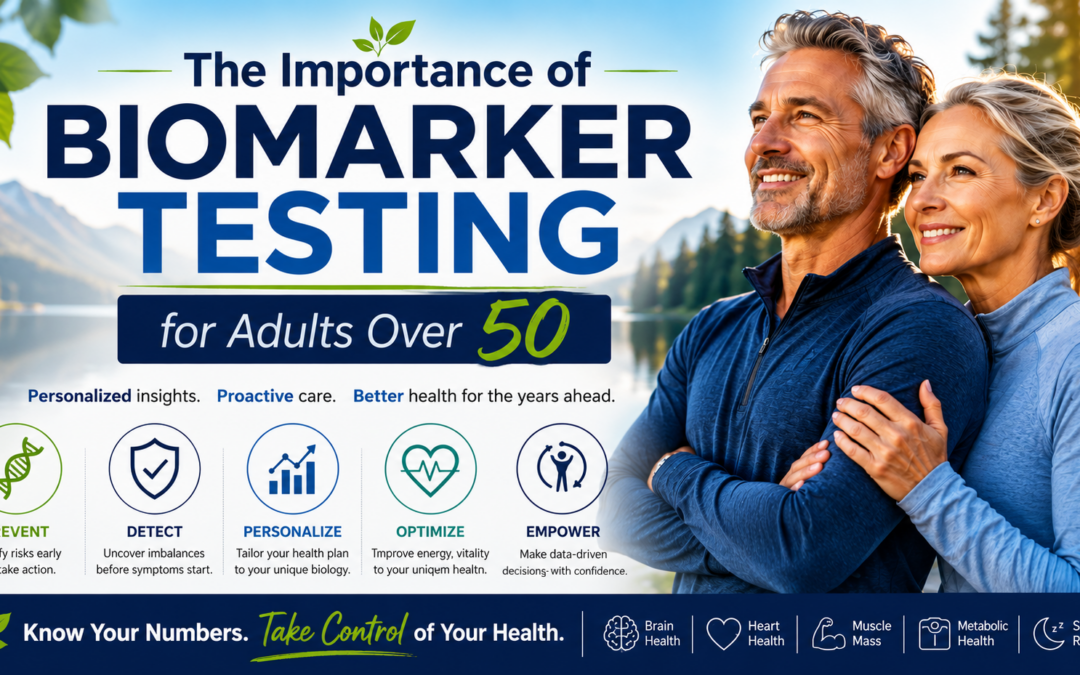
As we age, the body changes gradually and often silently. Blood vessels stiffen. Muscle mass declines. Inflammation can rise. Hormone production shifts. Metabolism slows. Cognitive resilience may begin to decline years before symptoms appear.
The challenge is that most of these changes develop quietly over time.
By the time obvious symptoms appear — fatigue, memory loss, diabetes, cardiovascular disease, frailty, or loss of independence — the underlying biological processes may have been progressing for years or even decades.
This is why biomarker testing has become one of the most important tools in modern healthy aging and longevity medicine. Biomarkers allow adults over 50 to measure what is happening beneath the surface before serious disease develops.
Rather than waiting for illness, biomarker testing supports a proactive strategy focused on prevention, vitality, cognitive performance, mobility, cardiovascular health, and extending healthspan — the years of life spent healthy and independent.
What Are Biomarkers?
Biomarkers are measurable indicators of how the body is functioning.
They are typically measured through blood, urine, saliva, stool, imaging, or wearable technology and provide insight into major systems including:
- Cardiovascular health
- Metabolic function
- Hormonal balance
- Inflammation
- Brain health
- Immune function
- Kidney and liver performance
- Nutritional status
- Biological aging
Think of biomarkers as your body’s internal dashboard.
Just as a pilot monitors altitude, fuel, engine temperature, and airspeed, adults over 50 should monitor key physiological markers that predict future health outcomes.
Some biomarkers detect disease risk early. Others measure resilience, recovery capacity, inflammation, or biological aging itself.
Why Biomarker Testing Becomes More Important After 50
After age 50, the risks for many chronic diseases increase significantly:
- Cardiovascular disease
- Type 2 diabetes
- Sarcopenia (muscle loss)
- Osteoporosis
- Cognitive decline
- Neurodegenerative disease
- Hormonal decline
- Chronic inflammation
- Frailty
- Reduced immune resilience
Many adults assume these are simply “normal aging.” In reality, many of these conditions develop gradually and can often be slowed, prevented, or partially reversed with early intervention.
Biomarkers provide the feedback necessary to identify risk early enough to act.
The goal is not merely living longer. The goal is preserving:
- Strength
- Energy
- Mobility
- Independence
- Mental sharpness
- Recovery capacity
- Quality of life
The Shift From Reactive Medicine to Preventive Longevity
Traditional medicine often waits for disease.
Longevity-focused medicine aims to identify dysfunction years before disease develops.
For example:
- Elevated fasting insulin may appear years before diabetes
- High ApoB may predict cardiovascular disease decades before a heart attack
- Chronic inflammation may contribute to dementia long before memory symptoms
- Low testosterone or estrogen may affect muscle, energy, and cognition before diagnosis
- Reduced kidney function may develop slowly without symptoms
- Bone density loss can occur long before a fracture
Biomarker testing allows adults over 50 to monitor trends over time instead of waiting for catastrophic events.
This represents one of the biggest shifts in modern healthcare.
The Most Important Biomarkers for Adults Over 50
1. Cardiovascular Biomarkers
Heart disease remains the leading cause of death for older adults.
Many cardiovascular problems are preventable if detected early.
Key Tests
- ApoB
- LDL-C
- HDL-C
- Triglycerides
- Lipoprotein(a) [Lp(a)]
- High-sensitivity CRP (hs-CRP)
- Homocysteine
- Blood pressure
- Coronary calcium scan (CAC)
Why They Matter
ApoB and Lp(a) are particularly important because they better predict cardiovascular risk than standard cholesterol alone. Chronic inflammation, measured by hs-CRP, also strongly predicts vascular aging and cardiovascular disease.
Recommended Frequency
- Standard lipid panel: every 6–12 months
- ApoB and hs-CRP: annually
- Lp(a): once in adulthood unless elevated
- CAC scan: every 3–5 years for appropriate candidates
2. Metabolic Health Biomarkers
Metabolic dysfunction is one of the primary drivers of aging and chronic disease.
Key Tests
- Fasting glucose
- Fasting insulin
- HbA1c
- Triglyceride-to-HDL ratio
- Continuous glucose monitoring (CGM)
- Uric acid
Why They Matter
Insulin resistance often develops silently for years before diabetes appears. Elevated glucose and insulin accelerate aging, inflammation, vascular disease, and cognitive decline.
Continuous glucose monitoring can help older adults understand how specific foods, stress, sleep, and exercise affect glucose control in real time.
Recommended Frequency
- HbA1c and fasting glucose: every 6 months
- Fasting insulin: annually
- CGM use: periodic 2–4 week assessments several times per year
3. Inflammation Biomarkers
Chronic low-grade inflammation is one of the hallmarks of aging.
Researchers sometimes call this “inflammaging.”
Key Tests
- hs-CRP
- Ferritin
- IL-6
- White blood cell count
- ESR (erythrocyte sedimentation rate)
Why They Matter
Persistent inflammation is linked to:
- Heart disease
- Dementia
- Arthritis
- Frailty
- Cancer
- Autoimmune disease
- Accelerated biological aging
Inflammation is often driven by poor sleep, obesity, stress, inactivity, poor diet, infections, and environmental exposures.
Recommended Frequency
- hs-CRP: every 6–12 months
- Ferritin and CBC: annually
4. Hormonal Biomarkers
Hormones strongly influence aging, strength, cognition, sleep, recovery, and energy.
Key Tests for Men
- Total testosterone
- Free testosterone
- SHBG
- DHEA-S
- Estradiol
- PSA
- Cortisol
Key Tests for Women
- Estradiol
- Progesterone
- Testosterone
- DHEA-S
- FSH/LH
- Thyroid panel
Why They Matter
Hormonal decline affects:
- Muscle preservation
- Bone density
- Libido
- Mood
- Sleep
- Brain function
- Recovery
Many adults over 50 experience symptoms that are dismissed as “aging” when hormonal optimization may help significantly.
Recommended Frequency
- Comprehensive hormone testing: annually
- More frequent testing if on hormone replacement therapy
5. Muscle and Longevity Biomarkers
Preserving muscle after 50 is one of the strongest predictors of longevity and independence.
Important Measures
- Creatinine
- Albumin
- IGF-1
- Grip strength
- DEXA scan
- VO2 max
- Body composition analysis
Why They Matter
Loss of muscle mass and aerobic capacity strongly predicts:
- Falls
- Frailty
- Hospitalization
- Disability
- Mortality
Muscle is one of the most important longevity organs in the body.
Recommended Frequency
- DEXA scan: every 1–2 years
- Grip strength and body composition: every 6–12 months
- VO2 max testing: annually if possible
6. Bone Health Biomarkers
Bone loss accelerates with aging, particularly after menopause.
Key Tests
- DEXA scan
- Vitamin D
- Calcium
- Parathyroid hormone (PTH)
Why They Matter
Hip fractures are one of the major causes of loss of independence in older adults.
Early detection of osteopenia or osteoporosis allows preventive action through:
- Resistance training
- Protein optimization
- Vitamin D
- Hormonal support
- Fall prevention strategies
Recommended Frequency
- DEXA scan: every 1–2 years after age 50
- Vitamin D: every 6–12 months
7. Cognitive and Brain Health Biomarkers
Cognitive decline often begins years before symptoms appear.
Emerging Biomarkers
- Homocysteine
- Omega-3 index
- HbA1c
- Inflammatory markers
- APOE genetic testing
- Neurofilament light chain (NfL)
- Brain MRI (selected individuals)
Why They Matter
Brain health is heavily influenced by:
- Metabolic health
- Sleep
- Exercise
- Vascular function
- Inflammation
- Social connection
Protecting cognition should be a core longevity priority after 50.
8. Kidney and Liver Function
The liver and kidneys are critical for detoxification, medication processing, and metabolic regulation.
Key Tests
- Creatinine
- eGFR
- ALT
- AST
- GGT
- Bilirubin
Why They Matter
Kidney function naturally declines with age in many adults, but accelerated decline often signals metabolic or vascular dysfunction.
Fatty liver disease is now extremely common in adults over 50 and strongly linked to insulin resistance.
Recommended Frequency
- Comprehensive metabolic panel: every 6–12 months
9. Nutrient Biomarkers
Nutrient deficiencies become increasingly common with aging.
Key Tests
- Vitamin D
- Vitamin B12
- Folate
- Magnesium
- Ferritin
- Zinc
- Omega-3 index
Why They Matter
Older adults often absorb nutrients less efficiently and may take medications that deplete vitamins and minerals.
Deficiencies can contribute to:
- Fatigue
- Cognitive decline
- Weakness
- Neuropathy
- Immune dysfunction
Recommended Frequency
- Annual testing
- More frequent testing if deficiencies are identified
Biological Age vs Chronological Age
One of the most exciting areas in longevity science is biological age testing.
Two 65-year-olds may have dramatically different biological ages depending on:
- Exercise
- Sleep
- Nutrition
- Stress
- Muscle mass
- Inflammation
- Metabolic health
Emerging tools now attempt to estimate biological aging through:
- Epigenetic methylation testing
- Proteomics
- Metabolomics
- Advanced inflammatory markers
- Functional fitness testing
While still evolving, these technologies are helping redefine aging as something measurable and modifiable.
How Often Should Adults Over 50 Test Biomarkers?
Basic Longevity Panel
Every 6–12 months:
- Lipids
- ApoB
- Glucose
- HbA1c
- Insulin
- hs-CRP
- Kidney/liver function
- CBC
- Vitamin D
Comprehensive Longevity Panel
Annually:
- Hormones
- Nutrients
- Advanced cardiovascular markers
- Biological aging markers
- Body composition
- Functional performance
Specialized Testing
Every 1–5 years depending on risk:
- CAC scan
- DEXA scan
- Colonoscopy
- Advanced imaging
- Cognitive testing
Biomarkers Are Only Valuable If You Act on Them
Testing alone does not improve health.
The value comes from using data to guide action.
Biomarkers can help personalize:
- Nutrition
- Exercise
- Sleep optimization
- Stress reduction
- Hormonal support
- Supplement strategies
- Recovery protocols
- Medical interventions
The real power lies in tracking trends over time rather than obsessing over a single number.
Consistency matters more than perfection.
Final Thoughts
Adults over 50 have an enormous opportunity to improve both lifespan and healthspan through proactive biomarker testing.
The future of healthy aging is not passive.
It is measurable, preventive, personalized, and data-driven.
The earlier dysfunction is identified, the greater the opportunity to preserve strength, cognition, vitality, and independence for decades to come.
Biomarkers provide the roadmap.
The goal is not simply to avoid disease.
The goal is to remain energetic, capable, mentally sharp, physically resilient, and fully engaged in life for as long as possible.